

 English
 España

Portable Blender Buying Guide: Battery Life, Power and Blade Design Explained
 2026.11.13
 News
Portable blenders have quietly become one of the most requested small appliances in our factory. After more than fifteen years of building cordless kitchen appliances in Cixi, we have learned that the difference between a blender people love and one that ends up forgotten in a drawer rarely comes down to the colour of the housing. It comes down to three things: how long the battery really lasts, whether the motor holds its speed under load, and how the blades are shaped.
This guide unpacks each of those in plain language, so you can compare models on the points that matter instead of the numbers that simply look impressive on a box.
Why Battery Life Deserves Your First Attention
Battery life is usually printed as capacity in milliampere-hours, or mAh. Capacity tells you how much energy the pack can store, but not how many smoothies you will get, because the motor, the jar size and the food itself draw on that energy at very different rates.
On a single 3.7 V cell, most compact blenders manage somewhere between eight and twenty short blending cycles per charge, depending on how thick the mixture is. Dual-cell packs wired for 7.4 V store more energy and deliver noticeably more torque, so they handle frozen fruit and ice far more comfortably, though they add weight and cost.
Charging behaviour matters as much as capacity. USB-C is now standard, and a full charge typically takes two to four hours. Very few cordless blenders will blend while plugged in, so it pays to plan a routine rather than assume you can top up in the middle of a recipe.
| Battery setup | Realistic cycles per charge | Best suited for |
|---|---|---|
| 3.7 V, around 1,300 mAh | 8–12 short cycles | Soft fruit, protein shakes, light blends |
| 3.7 V, around 2,000 mAh | 12–20 short cycles | Daily single-serve juices and smoothies |
| Dual-cell 7.4 V, 4,000 mAh total | 15–25 short cycles | Frozen fruit, ice, thicker mixtures |
Four questions will tell you more than any headline claim:
- Is the cell sealed into the base or replaceable? Sealed packs are lighter and cheaper to build; removable ones can be swapped years later.
- Is it a single cell or a dual-cell pack? This decides torque far more than the mAh figure alone.
- Is there a low-voltage cut-off? It protects the cells from deep discharge and quietly extends service life.
- Does the advertised "up to X blends" describe a full jar, or a few seconds of light blending?
Reading Motor Power Without Being Fooled by Big Numbers
Wattage on a cordless blender is almost always a peak figure, measured with the motor spinning freely. Under a jar of frozen berries it drops quickly. A 3.7 V model might peak between 30 and 60 W, while a 7.4 V model can reach 100 to 200 W. Neither comes close to a 500 W corded countertop blender, and that is entirely fine, because a portable blender answers a different question.
What separates a good cordless motor from a weak one is not peak wattage but how well it holds speed as the mixture thickens. A blade that keeps turning at speed in a thick blend will outperform one that stalls and stutters, even when the stalled model has the larger number on its label.
Three details worth confirming
First, stall behaviour: when the blades slow down, does the motor recover as the load eases, or does it stop and need a restart? Second, thermal protection: an automatic cut-off after thirty to sixty seconds of continuous running is normal and healthy, because small motors need time to shed heat. Third, the transmission: a metal drive coupling between motor and blade lasts far longer than a moulded plastic one in daily use.
Blade Design: Shape, Count and Material
Blades do the actual work, and their geometry matters more than the number printed on the packaging. Food-grade 304 stainless steel is the sensible baseline; hardening and a clean machined edge make the difference between slicing through ice and bouncing off it.
How many blades do you need?
Four blades, arranged as two angled upward and two downward, handle most everyday jobs and keep the load on the motor reasonable. Six-blade assemblies create more contact points and blend faster, but they demand more torque, which is why they usually appear alongside larger battery packs.
Shape and position
Curved blades that sweep upward pull ingredients down into the centre instead of throwing them against the wall of the jar. A slightly offset shaft can help create a circulation loop, while a straight bottom-mounted shaft is simpler, quieter and easier to seal. Look also at the gap between blades and the base of the jar; too large a gap leaves a pocket of unblended fruit that no amount of shaking will fix.
Finally, check that the blade assembly cannot run unless the jar is properly locked in place. A simple mechanical interlock is the most reliable safety feature we know of, and it costs very little to build in.
Capacity, Jar Material and Cleaning
Most personal and portable models sit between 350 ml and 600 ml, the sweet spot for one drink. Cordless table blenders go beyond a litre and suit family portions, but they are no longer something you slip into a bag. Match the size to how you will actually use it, not to how you imagine you might.
Tritan copolyester offers clarity and impact resistance without the weight of glass, while AS plastic is lighter and less expensive but scratches more easily over time. Whichever you choose, a wide mouth makes filling and rinsing simpler, and removable silicone gaskets prevent the sour smell that builds up in sealed seams. Dishwasher-safe parts are a genuine convenience; a ten-second rinse with warm water and a drop of washing-up liquid covers everything else.
A Short Checklist Before You Buy
- Battery: single or dual cell, real capacity, and whether the pack is replaceable.
- Charging: USB-C, full charge time, and whether it blends while plugged in.
- Power: peak wattage plus evidence of how the motor behaves under load.
- Blades: material, count, geometry and the gap to the jar base.
- Safety: jar interlock, thermal cut-off and low-voltage protection.
- Capacity and material: a size that fits your routine, a jar that resists scratching.
- Cleaning: removable gasket, dishwasher-safe parts, wide mouth.
If a listing cannot answer at least four of these seven points, that silence is itself useful information.
Three Ways to Match a Model to the Job
All of this is easier to apply to concrete examples. Here are three shapes the same idea takes in our own line.
For daily single-serve smoothies
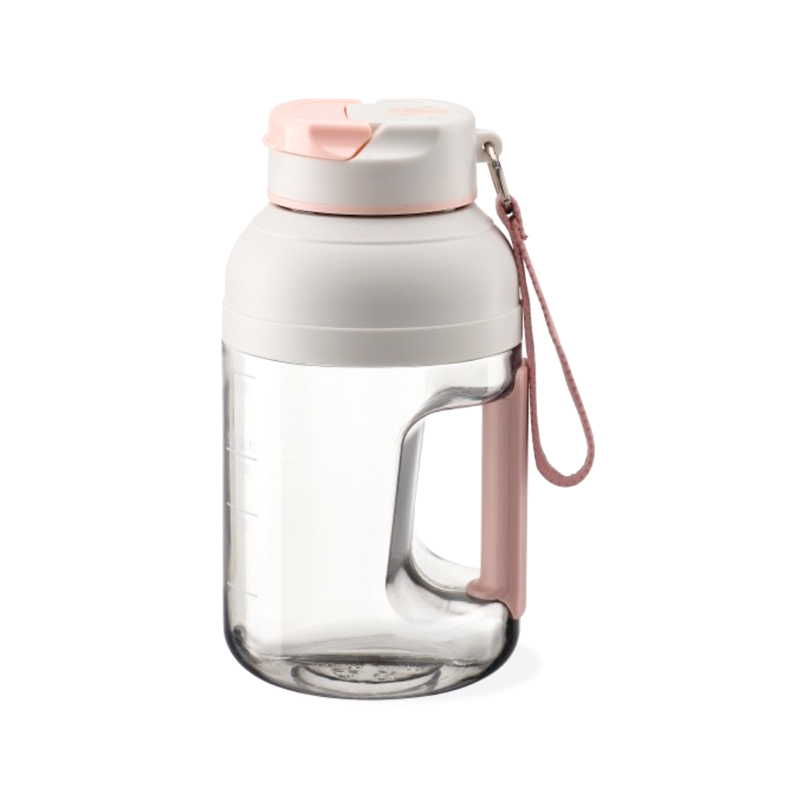
A mid-capacity portable blender covers the gym bag and the office desk without asking for special treatment. The LD-9501 is built as a straightforward everyday model: fill, lock, blend and drink from the same bottle.
For tight spaces and travel
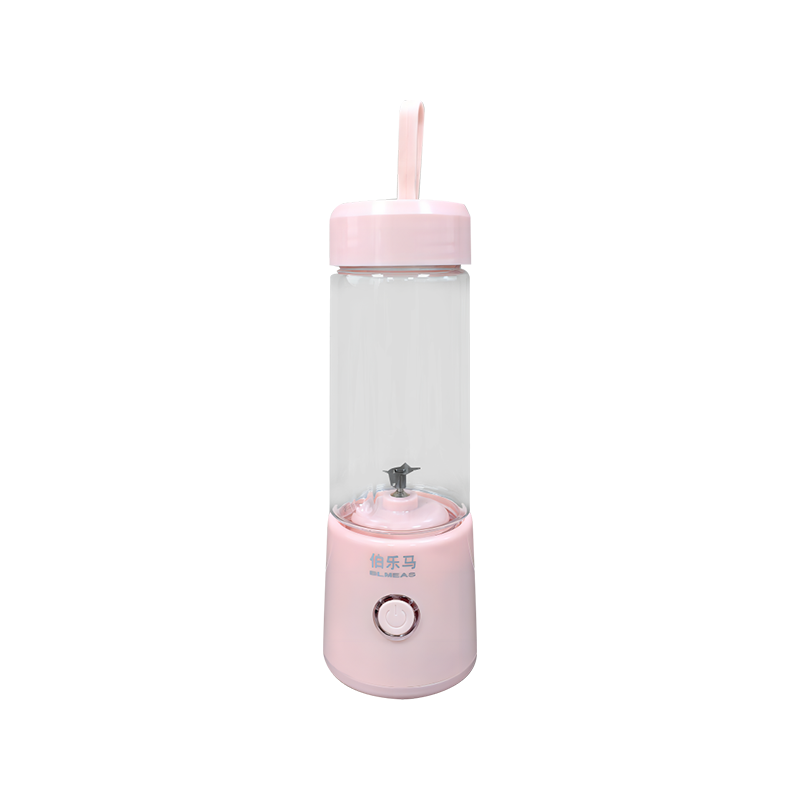
If the blender has to fit into a packed bag or a shallow kitchen drawer, compactness and a well-sealed lid matter more than capacity. The LD-330A is the model to look at when saving space is the priority.
For family portions at the table
Once you are blending for two or three people, a cordless table blender makes more sense, and it is worth reading how a cordless table blender compares to a traditional one before deciding. The LD-9511W sits in that category.
If You Are Buying for a Retail Range
The same three variables decide whether a product leaves the shop and never comes back. In our experience, returns on cordless blenders cluster around two causes: batteries that fade faster than the customer expected, and motors that stall on frozen fruit. Both are design decisions made long before production, not faults that appear on a shelf.
When we work with buyers, we start from the intended use and then work backwards to cell configuration and blade geometry. You can see the full spread of formats in our portable blender range, and we are always glad to talk through which configuration suits a particular market.
The Short Version
Battery capacity sets your expectations, motor behaviour under load decides whether those expectations hold, and blade geometry decides how much work the motor has to do in the first place. Get those three aligned and almost everything else, from jar material to lid design, becomes a matter of preference rather than compromise.
PREV: How to Charge and Clean a Cordless Hand Mixer: Tips from the Manufacturer
NEXT:It is the last article
NEXT:It is the last article
 SEE more
 SEE more
 SEE more
 SEE more
 SEE more
 SEE more
 SEE more
 SEE more
 SEE more
 SEE more
 SEE more
 SEE more
 SEE more
 Leave a message
Copyright © Ningbo Longde Life Electric Appliance Co., Ltd.  Wholesale Portable Kitchen Appliance For Outdoor Use Manufacturers