

 English
 España
What Does a Milk Frother Do? Functions, Types & Benefits
 2026.08.10
 News
News
If you have ever watched a barista swirl a pitcher of milk into a velvety cloud and pour it over a shot of espresso, you were looking at a milk frother’s work. A milk frother is a kitchen tool that whips air into milk, turning it into the light, creamy foam that tops lattes, cappuccinos, and macchiatos.
For many home coffee drinkers, the question “what does a milk frother do?” comes down to one practical answer: it upgrades an ordinary cup of milk coffee into something close to café quality without requiring an espresso machine. This article covers how a frother works, the main types, what you can make, and whether you need one.
What Is a Milk Frother and What Does It Do?
A milk frother is a small kitchen appliance that mixes air into milk. The air forms tiny bubbles, giving the milk extra volume, a lighter texture, and a silky mouthfeel. The result is the foam layer on top of your favorite café drinks.
That foam is not just decoration. It changes a drink in three measurable ways:
- Mouthfeel: frothed milk feels creamier and more substantial than flat milk.
- Heat retention: the foam traps warm air and helps the drink stay hot longer.
- Visual appeal: a defined foam cap makes any milk-based drink look professionally made.
This is why a frother matters even for simple coffee. Pour warm flat milk into instant coffee and you get a pale, one-dimensional drink. Froth the same milk first, and the result looks and tastes noticeably closer to café quality. The core benefit of the device is exactly this: turning plain milk into structured foam.
How Does a Milk Frother Work?
All milk frothers share one working principle: they inject air into milk and break that air into fine bubbles through rapid agitation. The bubbles are what we perceive as foam, and their size and stability depend largely on the milk itself.
Two components of milk determine the outcome. Milk protein traps the air and holds the bubble structure. Milk fat adds richness and creates a denser texture. Different milk types therefore behave differently:
- Whole milk produces a dense, creamy foam with fine bubbles.
- Skim milk produces a lighter foam with larger bubbles that collapse quickly.
- Oat milk and soy milk can both produce stable foam when heated and stirred properly.
- Almond milk produces a thinner, less stable foam unless it contains added stabilizers.
Temperature also plays a role. Heated milk has more flexible proteins, which form a stronger foam structure. Cold milk can still be frothed, but the texture is denser, closer to a thick cream layer. That is why many electric frothers include separate hot and cold settings.
The Main Types of Milk Frothers
Four types of milk frothers are commonly available for home use. They differ in price, effort, and foam quality.
Manual Frothers
A manual frother is typically a spring-loaded whisk or a plunger-style pitcher driven by your arm. It is the cheapest option and needs no electricity, but the foam is coarse and results depend on technique.
Handheld Electric Frothers
A handheld electric frother spins a small whisk head at high speed, drawing air into the milk in about twenty seconds. These devices are compact, inexpensive, and easy to clean.
In this category you will find both corded and cordless designs. A corded unit is always ready and never needs charging, but it must be used near an outlet. A cordless version runs on a rechargeable battery, so it can be stored in a drawer and used anywhere. To see how the two approaches differ in practice, compare a corded milk frother with a portable cordless milk frother side by side.
Automatic Electric Frothers
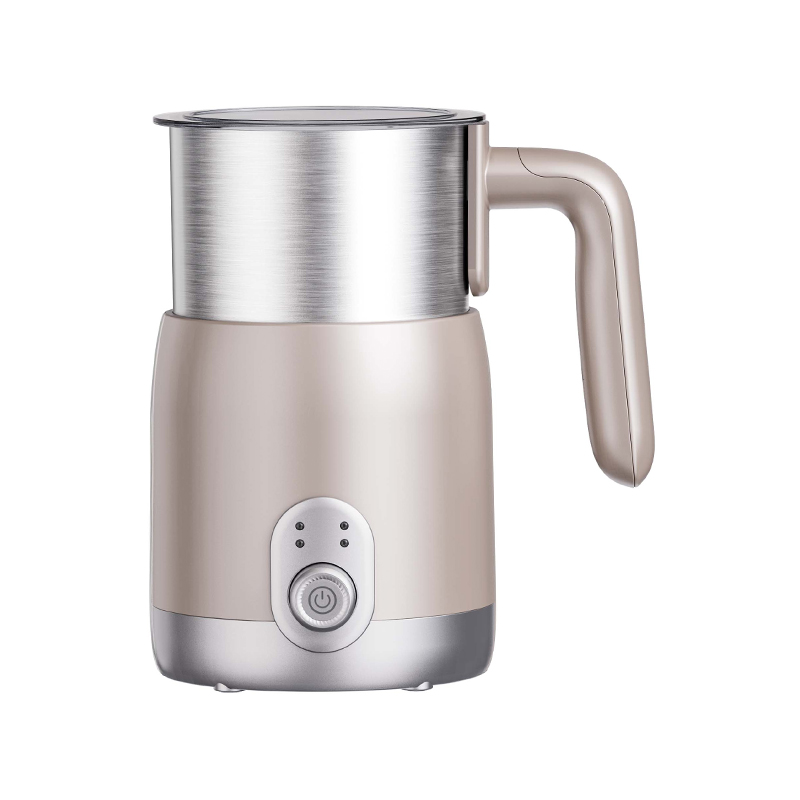
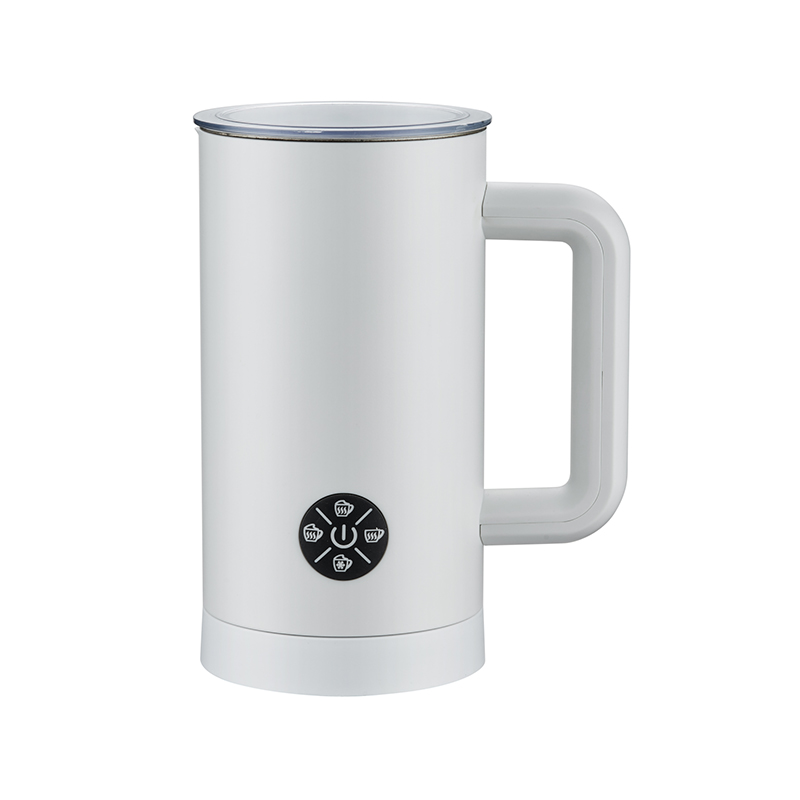
An automatic frother looks like a small metal pitcher on a base. You pour in milk, choose hot or cold, and press a button. The base heats the milk and spins a stirring disc, producing foam with no hands-on work. It suits daily use and gives consistent results, at a higher price and with a larger counter footprint.
Steam Wands
A steam wand is built into espresso machines. It injects pressurized steam into milk, heating and aerating it at the same time, producing the finest microfoam in specialty coffee. That quality requires an espresso machine, practice, and more cleanup. If you already own one, it is the best route. If not, a dedicated frother is more practical.
| Type | Effort | Foam quality | Best for |
|---|---|---|---|
| Manual | High | Coarse | Occasional use, travel |
| Handheld electric | Low | Smooth | Single cups, small kitchens |
| Automatic electric | Very low | Consistent | Daily use, multiple cups |
| Steam wand | Medium plus skill | Finest microfoam | Espresso machine owners |
What Drinks Can You Make with a Milk Frother?
The most common use is topping espresso-based drinks, but a milk frother also expands your non-coffee options.
- Latte: a large amount of hot milk with a thin layer of foam, poured over espresso.
- Cappuccino: equal parts coffee, milk, and thick foam served in distinct layers.
- Latte macchiato: hot milk topped with a thick foam cap, with espresso poured through to create layers.
- Hot chocolate: frothed milk replaces plain milk for a lighter and richer cup.
- Matcha latte: frothed milk poured over whisked matcha creates a smooth, balanced drink.
- Milk tea: frothed milk adds a creamy texture that plain milk cannot match.
For cold drinks, a frother with a cold setting, or a handheld model used with chilled milk, produces the dense cold foam that floats on iced lattes and cold brew. That layer holds its shape far longer than plain milk.
If you want full control over your plant-based milk, you can make fresh soy milk at home with a soy milk maker and then foam it. This combination gives you a clean, additive-free base that can be frothed the same way as dairy milk.
Milk Frother vs. Alternative Methods: Does It Really Make a Difference?
A milk frother is not the only way to create foam, but it is the most reliable one in a home kitchen.
Manual whisking works, but it takes minutes of vigorous effort and produces large bubbles that collapse quickly. A handheld electric frother reaches a better result in about twenty seconds.
A French press can also froth milk if you heat the milk, pour it in, and pump the plunger. It works, but it is messy, and a dedicated frother reduces the effort and the cleanup.
Simply heating milk and pouring it over coffee misses the third element entirely. The foam layer changes the drink’s temperature profile, texture, and appearance.
Does everyone need a milk frother? No. If you rarely drink milk coffee, you can skip it. But if you drink lattes or cappuccinos regularly, a frother is one of the most affordable tools that moves home coffee closer to café results. Handheld models fit a tight budget; automatic models suit daily use.
Milk selection also affects the final texture, so it helps to match the milk to your expectations:
- Whole milk: dense, sweet foam and the easiest texture to work with.
- 2% milk: slightly lighter foam that is still stable.
- Oat milk: creamy foam that performs well in hot and cold modes.
- Soy milk: good volume, especially when protein-fortified.
- Almond milk: thin foam; choose a barista-style version with stabilizers for better results.
Tips for Getting the Best Results from Your Milk Frother
Using a milk frother well does not require barista training, but a few habits make a clear difference.
Heat the milk to the right range
For hot foam, aim for about 55 to 65°C. Above this range, milk proteins break down, the foam collapses, and the milk can taste scorched.
Start with cold milk
Cold milk froths noticeably better than milk that has been sitting at room temperature. Keep the milk refrigerated until you are ready.
Position the frother correctly
Hold handheld models at a slight angle and keep the whisk head just below the surface. Too deep and you create little foam; too shallow and you splash milk everywhere. After frothing, tap the container gently to release large bubbles.
Clean the frother immediately
Milk residue dries quickly and sticks to whisk heads and pitchers. Rinse the parts in warm water right after use. For automatic models, wipe the interior after each batch and remove the lid and stirring mechanism for a deeper clean occasionally.
Maintain cordless devices
If you own a cordless milk frother, keep the battery charged and store it in a dry place. Rechargeable cells age faster when fully drained or exposed to heat, so charging after each use extends the device’s service life.
Final Thoughts: Should You Get a Milk Frother?
A milk frother earns its place in the kitchen if you drink milk-based coffee more than a few times a week. Handheld models give beginners an easy entry point. Automatic models deliver consistent results for the whole household. Steam wands remain the standard for serious espresso enthusiasts; if you only drink black coffee, you will never miss a frother.
Deciding whether to buy one comes down to your routine:
- Drink milk-based coffee daily: an automatic frother is a reasonable investment.
- Drink it occasionally: a handheld electric model is enough.
- Rarely drink milk coffee: you can skip it without missing anything.
For everyone else in the middle, the deciding factor is how often you want that layer of foam on top of your cup. If the answer is every morning, the purchase justifies itself quickly. To see the range of designs available, browse our full milk frother collection and match the type to your routine.
Business buyers evaluating a production partner can also review why choose BLMEAS to understand the quality system behind these appliances.
 SEE more
 SEE more
 SEE more
 SEE more
 SEE more
 SEE more
 SEE more
 SEE more
 SEE more
 SEE more
 SEE more
 SEE more
 Leave a message
Copyright © Ningbo Longde Life Electric Appliance Co., Ltd.  Wholesale Portable Kitchen Appliance For Outdoor Use Manufacturers