

 English
 España
What Type of Milk Should I Use for a Milk Frother? Whole, Skim and Oat Compared
 2026.09.11
 News
News
Skim milk can fill a frother with foam that collapses before you finish pouring, while whole milk produces a dense layer that holds a spoon upright for minutes — same machine, same effort, completely different result. The short answer: use whole dairy milk (around 3.25-3.5% fat) when you want the creamiest, most stable foam; choose 2% for a lighter but still dependable cup; use skim only if you want maximum volume and do not mind a shorter-lived foam; and pick barista-edition oat milk when you need a plant-based option. What separates great foam from a flat cup is not the frother itself — it is the balance of fat and protein in whatever you pour into it.
What Actually Creates the Foam
Protein builds the bubble walls
Every bubble in frothed milk is wrapped in a thin skin of protein. When the whisk spins or the coil agitates the liquid, milk proteins such as casein and whey unfold and migrate to the surface of each air pocket, bonding into a flexible wall around it. More usable protein means stronger walls and longer-lasting foam. Dairy milk carries roughly 3-4 grams of protein per 100 ml, which is why it froths so predictably. Drinks with far less protein — rice milk is the classic example — simply cannot build walls sturdy enough to survive more than a few seconds.
Fat adds richness, up to a point
Fat does not create foam; it flavors and cushions it. Fat globules settle into the bubble walls, slowing the drainage that eventually collapses them and giving foam its creamy mouthfeel. Past roughly 4% fat, though, the liquid becomes too heavy to aerate properly. Pour heavy whipping cream into a frother and the whisk will only thicken it, never foam it. Whole milk, at 3.25-3.5% fat, sits almost exactly in the sweet spot — enough richness to taste indulgent, not so much that the bubbles drown.
How Common Dairy Milks Compare
Once you understand the fat-and-protein balance, the ranking of dairy milks becomes predictable:
| Milk | Fat content | Foam character | Stability | Best for |
|---|---|---|---|---|
| Whole | 3.25-3.5% | Dense, creamy microfoam | Holds several minutes | Lattes, flat whites, cappuccinos |
| 2% | About 2% | Silky, slightly lighter foam | Good | Everyday coffee drinks |
| 1% | About 1% | Airy, light foam | Moderate | Lighter drinks |
| Skim | 0% | Large volume of airy bubbles | Collapses fastest | Foam-forward cappuccino style |
| Lactose-free | Same as base milk | Mirrors the original milk | Similar to base | Lactose-sensitive drinkers |
| Goat milk | About 3.5% | Creamy with a slight tang | Decent in small amounts | Flavor variety |
Lactose-free milk deserves a special mention because it behaves almost identically to the regular version: the lactase treatment only splits milk sugar, leaving fat and protein untouched. Goat milk froths respectably too, though its smaller fat globules give a slightly denser foam, and many people prefer it in smaller servings because of the tang.
Plant-Based Milks: What Works and What Fails
The most useful word on any carton is "barista". Barista editions are formulated with extra fat, added protein or stabilizers specifically so they can be steamed and frothed, and the difference against a standard version of the same drink is dramatic. Among the common options:
- Oat milk: the most dependable plant-based choice, especially barista versions, with a mild sweetness and foam that comes closest to dairy.
- Soy milk: froths reasonably well but curdles above about 60 °C (140 °F), particularly when poured into acidic coffee; barista soy is far more forgiving.
- Almond milk: low in protein, so foam is light and quick to fade, and it can separate when overheated; unsweetened barista blends work best.
- Coconut milk: beverage cartons are usually too thin to hold a foam, and canned coconut belongs in cooking, not in the frother.
- Rice and cashew milk: generally the weakest performers, too thin and low in protein to build stable bubbles.
If you drink plant-based milk every day, it is worth paying a little more for the barista version of your usual choice — the reformulation matters more than the base ingredient itself.
Temperature and Technique: The Other Half of the Result
Milk choice sets the ceiling, but technique decides whether you reach it. These habits matter as much as what you pour:
- Start cold. Refrigerator-temperature milk, around 4 °C (39 °F), gives you more time to build foam before the milk overheats.
- Stay in range. Aim for 55-65 °C (130-150 °F) for dairy and 55-60 °C (130-140 °F) for plant-based milks. Beyond that, proteins weaken, foam collapses and the milk picks up a scalded taste.
- Respect the fill line. Milk can double or triple in volume as it froths, and an overfilled jug frothers onto the base.
- Froth once. Re-whisking milk that has already cooled produces thin, weak foam; warm fresh milk instead.
- Rinse the whisk immediately. Dried milk film stiffens the spring and quietly ruins aeration on the next use.
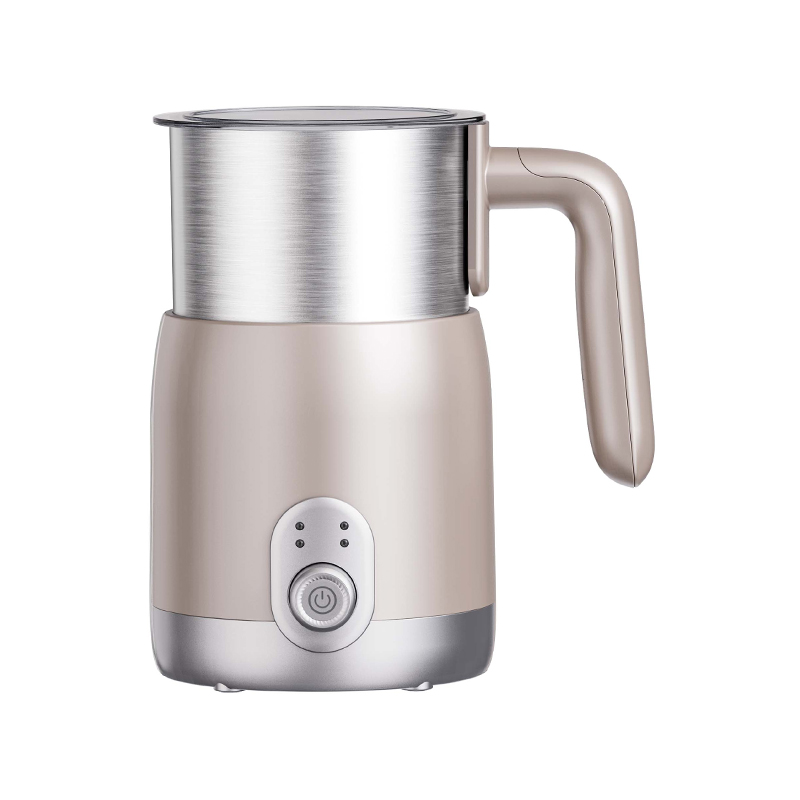
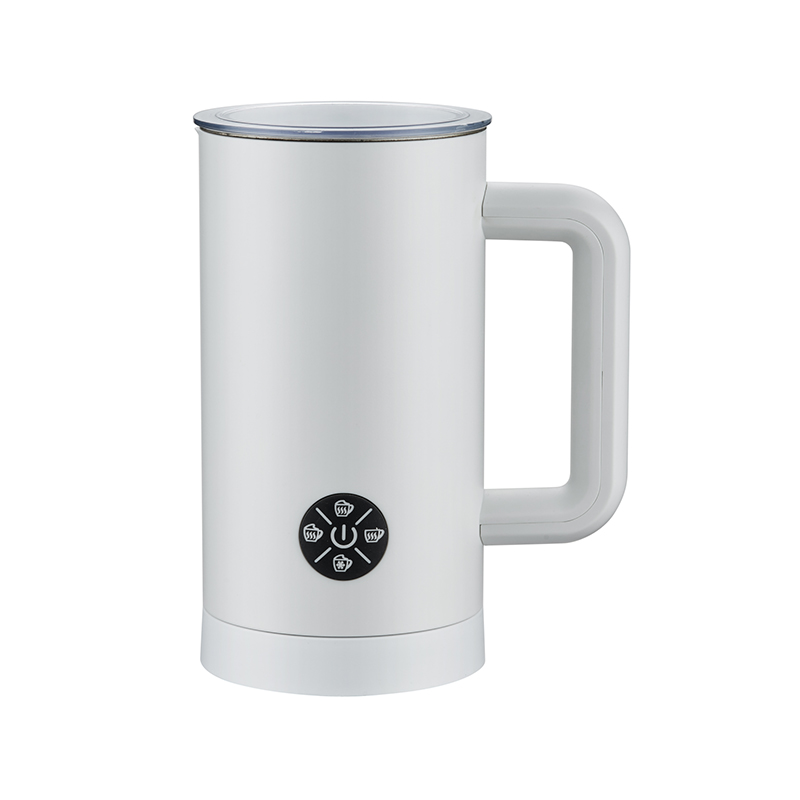
Jug-style electric frothers with automatic temperature control remove the most common way beginners ruin otherwise perfect whole milk: they heat and whisk at the same time and stop once the milk reaches the right range, delivering dense microfoam with almost no attention from you.
Matching the Milk to Your Frother
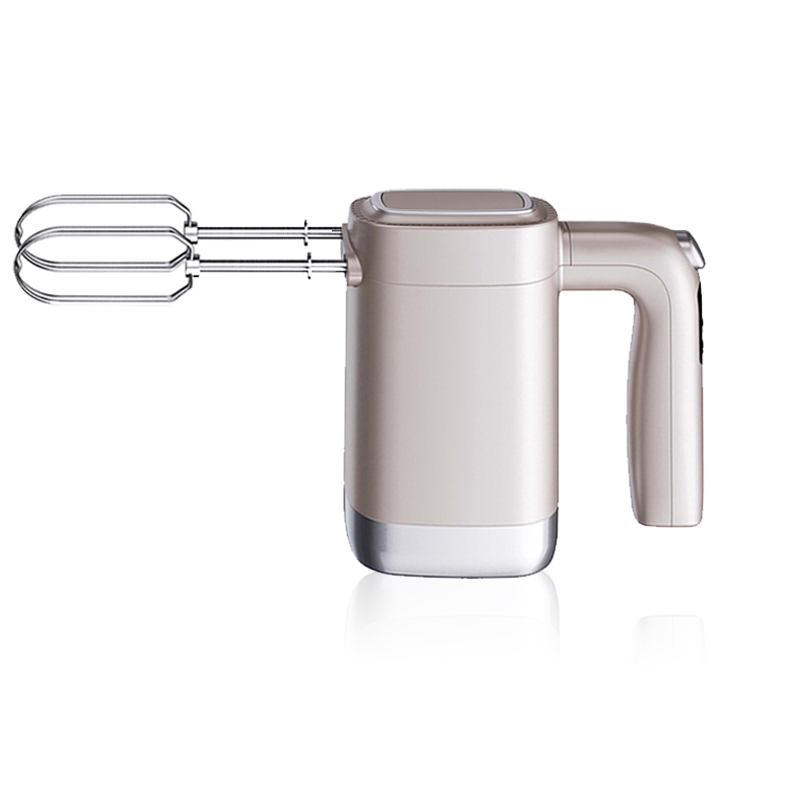
Handheld whisk frothers are the most forgiving option: they aerate anything you point them at, dairy or not, and foam quality depends mostly on technique and the milk's protein content. They shine for single cups and small volumes, and cordless models travel from kitchen to desk to campsite without an outlet in sight.
As a manufacturer specializing in battery-powered cordless kitchen appliances, we design our frothers with exactly this flexibility in mind — the same whisk that turns whole milk into cappuccino foam will whip barista oat milk for a dairy-free latte.
If you prefer the set-down convenience of a heated pitcher, a corded jug frother on the counter is hard to beat for morning routines, since you pour, press and return to your coffee while it works.
The Quick Answer, Recapped
- Creamy, café-style foam: whole dairy milk.
- Balanced everyday foam: 2% milk.
- Maximum volume with the shortest life: skim milk.
- Most reliable plant-based foam: barista-edition oat milk.
- Whatever you choose: start cold, stop between 55 and 65 °C, and clean the whisk right away.
Since 2009 we have been designing and manufacturing milk frothers and other small kitchen appliances for buyers across Europe, the Americas, Asia and beyond, and the milk question comes up constantly. The honest answer is that a frother's job is to make good milk taste better, so start with the milk, then pick the machine. If you are sourcing frothers or comparing our main product lines, the same fat-and-protein logic applies to every model we build.
 SEE more
 SEE more
 SEE more
 SEE more
 SEE more
 SEE more
 SEE more
 SEE more
 SEE more
 SEE more
 SEE more
 SEE more
 Leave a message
Copyright © Ningbo Longde Life Electric Appliance Co., Ltd.  Wholesale Portable Kitchen Appliance For Outdoor Use Manufacturers